How Coaches Can Master Client Acquisition: Exploring Channels and Tools for Success
By Andras Bodnar · 22 April 2025 · 5 min read
If you're a coach looking to grow your practice, finding and converting the right clients is probably one of your biggest challenges. Whether you're just starting out or looking to scale, client acquisition can feel overwhelming. With the right strategies and tools, it doesn't have to be.
Let's explore the most effective client acquisition channels, their pros and cons, and how you can overcome the most common challenge to grow your coaching business with confidence.
Key takeaways
No single channel suits every coach. Social media, paid ads, email, referrals, workshops and SEO each have clear strengths, costs and ideal use cases.
Most channels leave you with little more than a name and an email address, so you are left guessing about a prospect's needs and readiness.
Learning more about a prospect before the first conversation saves time and leads to more relevant follow-ups.
A combination of channels, chosen to suit your strengths and audience, usually works best.
The Key Client Acquisition Channels for Life Coaches
As a life coach, there are many ways to attract and convert clients, but not all channels are created equal. Each method has its own strengths, challenges, and ideal use cases.
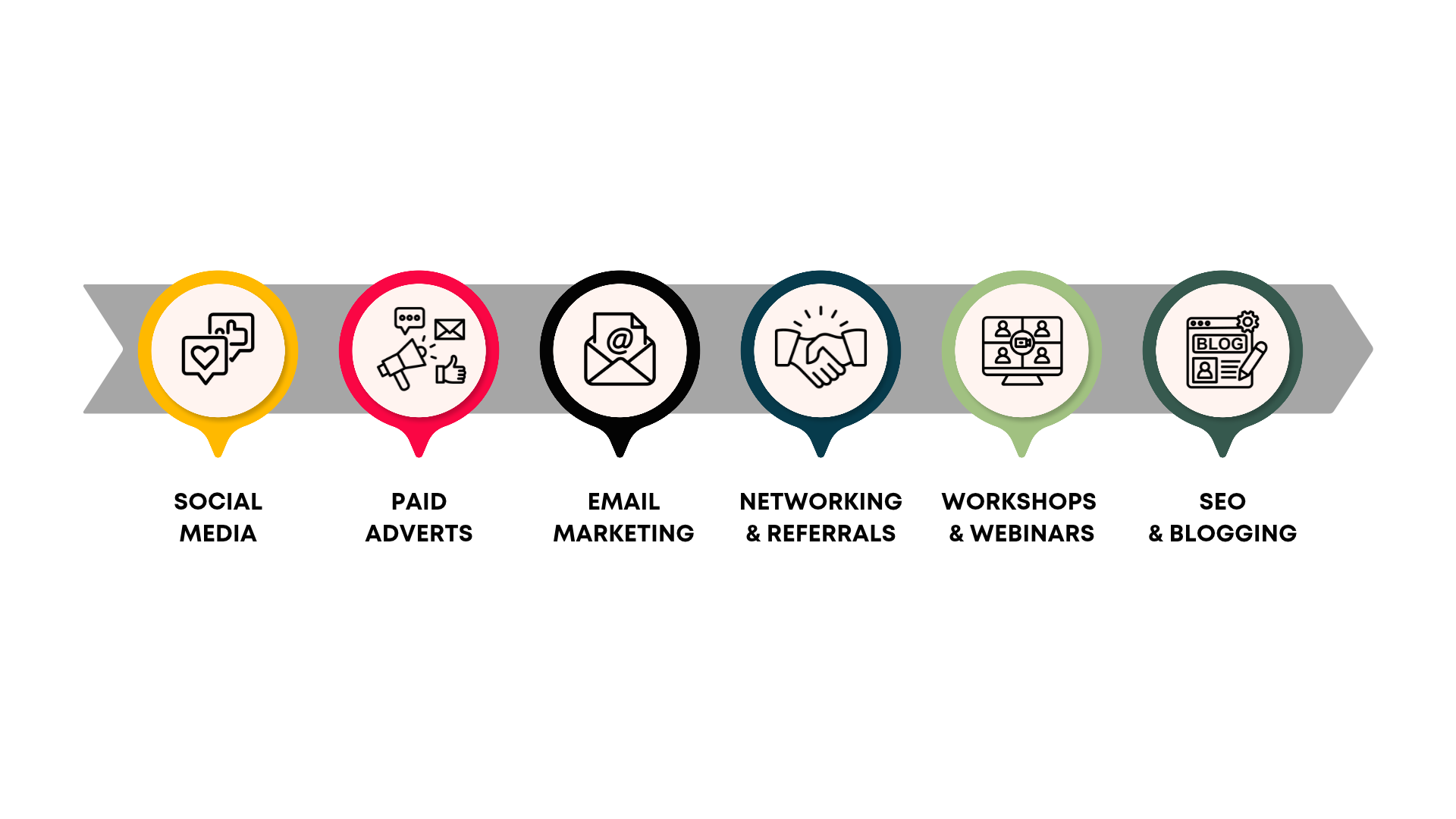
Here's a quick overview of the channels we will look at:
Social Media: Build your personal brand and engage with a wide audience.
Paid Advertising: Drive immediate traffic with targeted campaigns.
Email Marketing: Nurture leads and build long-term relationships.
Networking & Referrals: Leverage trust and personal connections.
Workshops & Webinars: Showcase your expertise and generate leads.
SEO & Blogging: Build authority and attract organic traffic over time.
Comparison of Client Acquisition Channels
Let's examine the pros and cons of each channel, what they're best for, along with examples and tips in this comparison table:
Channel | Pros | Cons | Best For | Tips/Examples |
|---|---|---|---|---|
Social Media | Broad reach, cost-effective, real-time engagement. | Time-intensive, algorithm changes, limited lead information. | Coaches building a personal brand and engaging visually with their audience. | Example: Post client testimonials or transformation stories on Instagram. Use scheduling tools like Buffer to save time. |
Paid Advertising | Quick results, precise targeting, scalable. | Expensive, requires expertise, ad fatigue. | Coaches with a marketing budget and clear conversion pathways (e.g., landing pages). | Tip: Start with a small budget and test different ad creatives. Use retargeting ads to re-engage website visitors. |
Email Marketing | High ROI, personalised communication, scalable with automation tools. | Time-intensive to build a list, risk of generic campaigns. | Coaches nurturing long-term leads and building relationships over time. | Example: Offer a free resource (e.g., an eBook or checklist) to grow your email list. Use segmentation to tailor messages. |
Networking & Referrals | High trust factor, cost-effective, builds long-term relationships. | Slow growth, network-dependent, time-intensive. | Established coaches with a strong network or those who excel in personal connections. | Tip: Ask satisfied clients for referrals and offer incentives. Attend local business meetups to expand your network. |
Workshops & Webinars | Highly engaging, scalable, effective for lead generation. | Time-intensive, unpredictable attendance, technical challenges. | Coaches with strong public speaking skills and a desire to educate prospects. | Example: Host a free webinar on a common coaching challenge (e.g., "Overcoming Self-Doubt") and collect attendee emails. |
SEO & Blogging | Long-term visibility, cost-effective, builds authority in your niche. | Slow results, high competition, requires consistent effort. | Coaches focused on building a niche audience and long-term organic traffic. | Tip: Write blog posts answering common client questions (e.g., "How to Overcome Procrastination"). Use tools like Yoast for SEO. |
The Common Challenges of Client Acquisition
Across all these channels, one challenge stands out: the lack of actionable insights about your leads.
Whether you're generating leads through social media, ads, or workshops, the information you gather is often limited to a name and email address. This leaves you guessing about a prospect's needs, readiness, and goals.
Without this deeper understanding, it's easy to waste time following up with unqualified leads or crafting generic messages that don't resonate. For life coaches, this can be frustrating and time-consuming, taking you away from what you do best: coaching.
A Smarter Way to Grow Your Coaching Business
Many traditional client acquisition methods leave you with little more than a name and email address, forcing you to guess about a prospect's needs, readiness, and goals. One way to close that gap is to invite prospects to reflect before the first conversation, through a short assessment that reflects your coaching.
This is what Inisio is built for. Here's how it works today:
Inisio builds an assessment from your own website and materials, at the depth you choose: Snapshot, Focused or Deep Dive.
You share the assessment link wherever you already meet prospects, for example in a blog post, a newsletter or a social media post.
When a prospect completes it, you receive a report on their goals, challenges and readiness, with likely needs, possible risks and suggested discussion points, plus a ready-to-send follow-up email you can adapt.
The prospect receives their own personal report with a clear next step, so the assessment gives them something of value too.
This deeper understanding allows you to focus your time on the prospects who are a good fit, write follow-ups that speak to what they actually told you, and arrive at the first conversation already knowing what matters to them.
FAQ
1. What is the best way to get coaching clients?
The best way depends on your strengths and audience. Social media is great for building a personal brand, while email marketing and workshops are effective for nurturing leads. A combination of strategies often works best.
2. How can I save time on client acquisition?
Learn as much as you can about a prospect before you speak. An assessment such as Inisio's shows you each prospect's goals, readiness and fit before the call, so you can spend your time on the conversations most likely to lead somewhere, and follow up with a message that reflects their answers.
3. How long does it take to see results from SEO?
SEO is a long-term strategy that typically takes 3 to 6 months to show significant results, but the traffic it generates is sustainable and cost-effective.
4. How do I stand out in a crowded coaching market?
To stand out, focus on defining your niche and showcasing your unique value proposition. Identify the specific problems you solve and the audience you serve best. Use storytelling to share your journey and client success stories, and consistently create content that demonstrates your expertise. Remember, make your content about your client, not you.
Giving prospects a personal report based on their own answers is another way to stand out, because it shows from the very first interaction that you pay attention to the individual.
5. What's the most cost-effective way to attract coaching clients?
The most cost-effective methods are those that leverage organic growth, such as social media marketing, networking, and SEO. For example, you can use Instagram or LinkedIn to share valuable tips and engage with your audience without spending on ads. Blogging and SEO can also drive long-term traffic to your website. Additionally, offering free resources like webinars or downloadable guides can help you build trust and grow your email list without a large upfront investment.
Conclusion
Client acquisition doesn't have to be a guessing game. By understanding the strengths and limitations of each channel and addressing the common challenges, you can create a more effective and sustainable strategy for growing your coaching business.
Whichever channels you choose, the step that makes the biggest difference is understanding each prospect before the first conversation. That is where your time, and theirs, is best spent.